Success Story
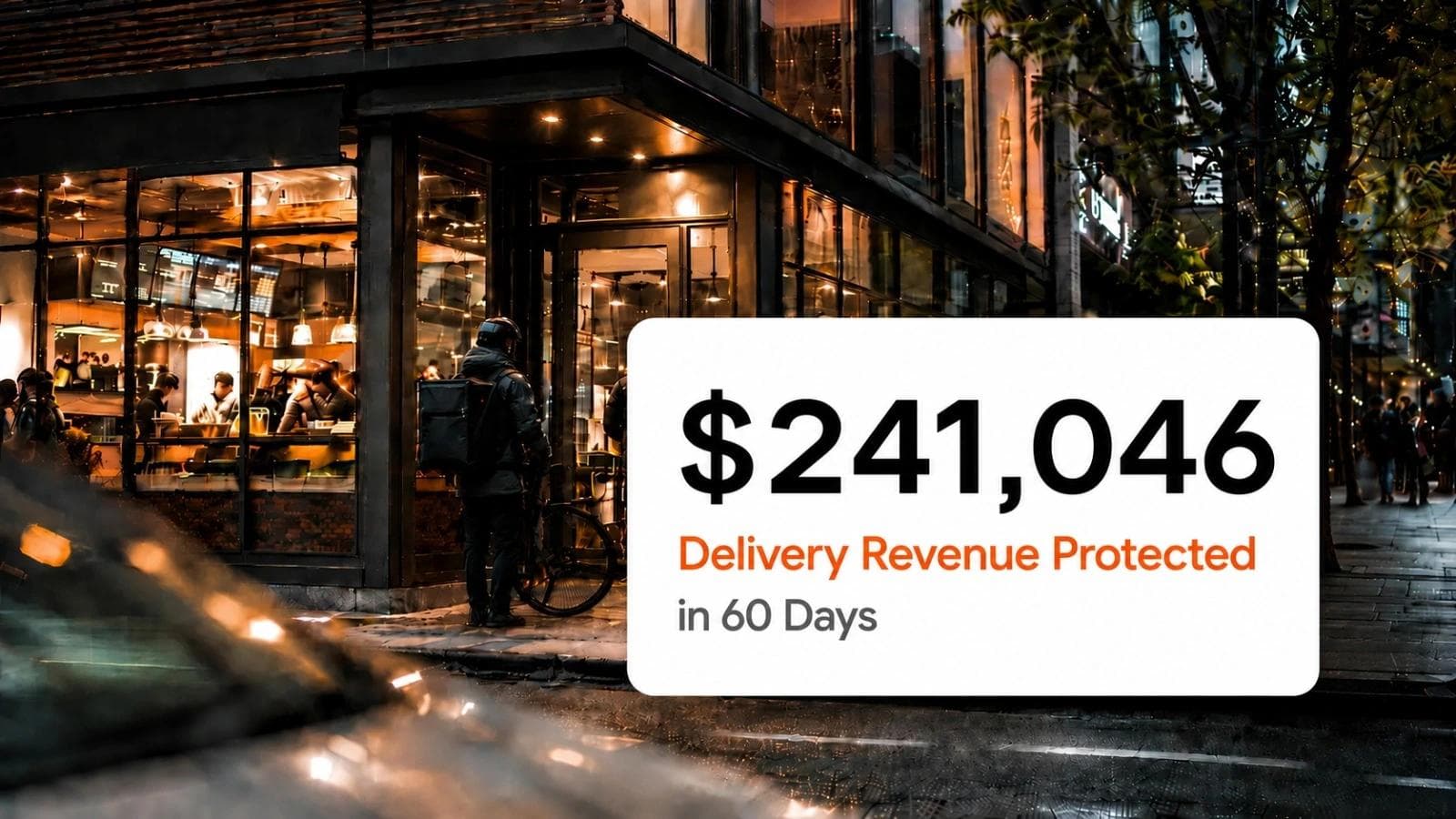
200+ Location QSR Brand Protects $241,046 in At-Risk Delivery Sales and Saves 3,440 Downtime Hours in 60 Days
Summary
When a restaurant goes offline on DoorDash or Uber Eats, customers cannot order. That means missed sales, fewer tickets, and lost revenue that most teams do not see until it is too late.
For one 200+ location QSR brand, Voosh helped turn delivery app downtime from a hidden revenue leak into a measurable operating win. In just 60 days, Voosh detected offline stores, automatically switched eligible locations back on, and reduced the daily manual work of checking each marketplace store by store.
The result: $241,046 in potential sales protected, 3,440 potential downtime hours saved, and 34,604 auto-switch-ons completed across the brand’s delivery operation. For multi-unit QSR operators, the message is simple: if your stores are offline, guests cannot order. Voosh helps keep every location online, visible, and selling.
The Challenge
Before Voosh, the operations team was dealing with a problem every multi-unit restaurant brand understands: delivery downtime adds up fast.
Stores were going offline without being caught fast enough.
Across 200+ locations, even a short outage on DoorDash or Uber Eats could quietly turn into missed orders and lost potential sales.
Getting stores back online depended on manual follow-up.
Teams had to notice the issue, check the marketplace, figure out what happened, and manually switch the store back on.
Small outages became a big operations drain.
One offline store might look minor. Across a large footprint, repeated downtime created constant monitoring, follow-ups, and wasted team time.
The business impact was not easy to prove.
The team could see when stores went offline, but they did not always have a clear way to connect downtime to hours lost and potential sales at risk.
Voosh Impact
$241,046
Estimated potential sales protected from avoided downtime in 60 days
34,604
Auto-switch-ons completed by Voosh
3,440h
Potential downtime hours saved across protected stores
200+ locations
Managed through one delivery uptime monitoring and recovery workflow
Why It Worked

One place to see and act on downtime.
The team could move from spotting an offline store to fixing it without jumping between disconnected tools or waiting on manual follow-up.
Faster recovery across DoorDash and Uber Eats.
Auto-switch-on helped reduce the time stores stayed offline, keeping more ordering hours open for customers.
Clear proof of operational and revenue impact.
Voosh made delivery uptime measurable by tying recovery actions to potential downtime hours saved and potential sales protected.
What Voosh Did
Monitored delivery uptime across every location.
Voosh tracked store uptime across DoorDash and Uber Eats for one 200+ location restaurant footprint.
Automatically brought eligible stores back online.
When Voosh detected eligible downtime incidents, it switched stores back on to reduce the time customers could not order.
Removed the need for constant manual checking.
Operations teams no longer had to keep checking marketplace status one store at a time throughout the day.
Helped protect sales that would have been lost to downtime.
By reducing how long stores stayed offline, Voosh helped limit the potential revenue impact of delivery app outages.
Created a cleaner uptime workflow for the team.
Instead of reacting to every offline incident manually, the brand had a consistent system to monitor, recover, and measure delivery uptime.